


Among all the methods available to cosmetologists today, mesotherapy holds a special place — not as a “trendy” procedure, but as a biochemically justified tool for delivering active substances directly into the dermis, bypassing the epidermal barrier. This is exactly what explains its stable clinical effectiveness when working with three of the most complex concerns in aesthetic cosmetology: post-acne, scar changes, and age-related skin degeneration.
None of these concerns can be solved by superficial methods alone. Post-acne spots can be reduced with peels, but hyperpigmentation that extends into the dermis requires an effect on melanogenesis from within. Scars are a structural disruption of the matrix that cannot be “washed away” or “dissolved” by applying a cream. Age-related changes in the deeper layers of the dermis are inaccessible to topical products without disrupting the skin barrier.
This is where mesococktails with properly selected active ingredients become an indispensable tool for professionals. In this article, we will look at the mechanisms behind the formation of post-acne, scars, and age-related changes, the logic behind choosing active ingredients for mesotherapy, and practical protocols using professional Pelart Laboratory products.
Part I. Mechanisms of problem formation and therapy goals
Post-acne: what lies behind the spots
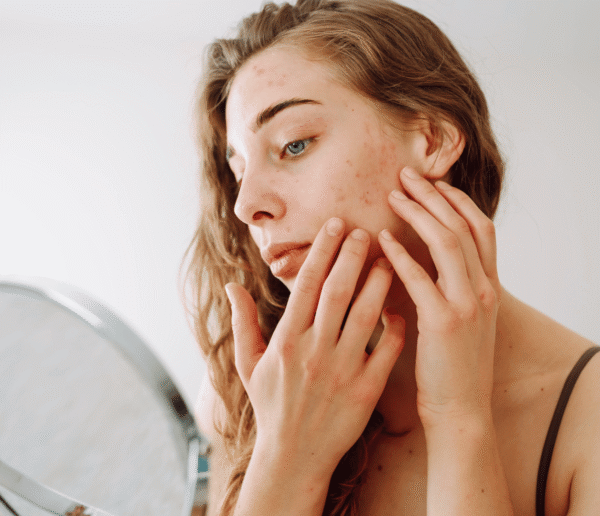
The term “post-acne” includes several fundamentally different conditions, each requiring its own strategy:
Erythematous spots are the result of post-inflammatory vasodilation and impaired microcirculation. The skin appears red or pink, and the vessels are dilated. This is a relatively “fresh” condition that responds well to correction when treated in time.
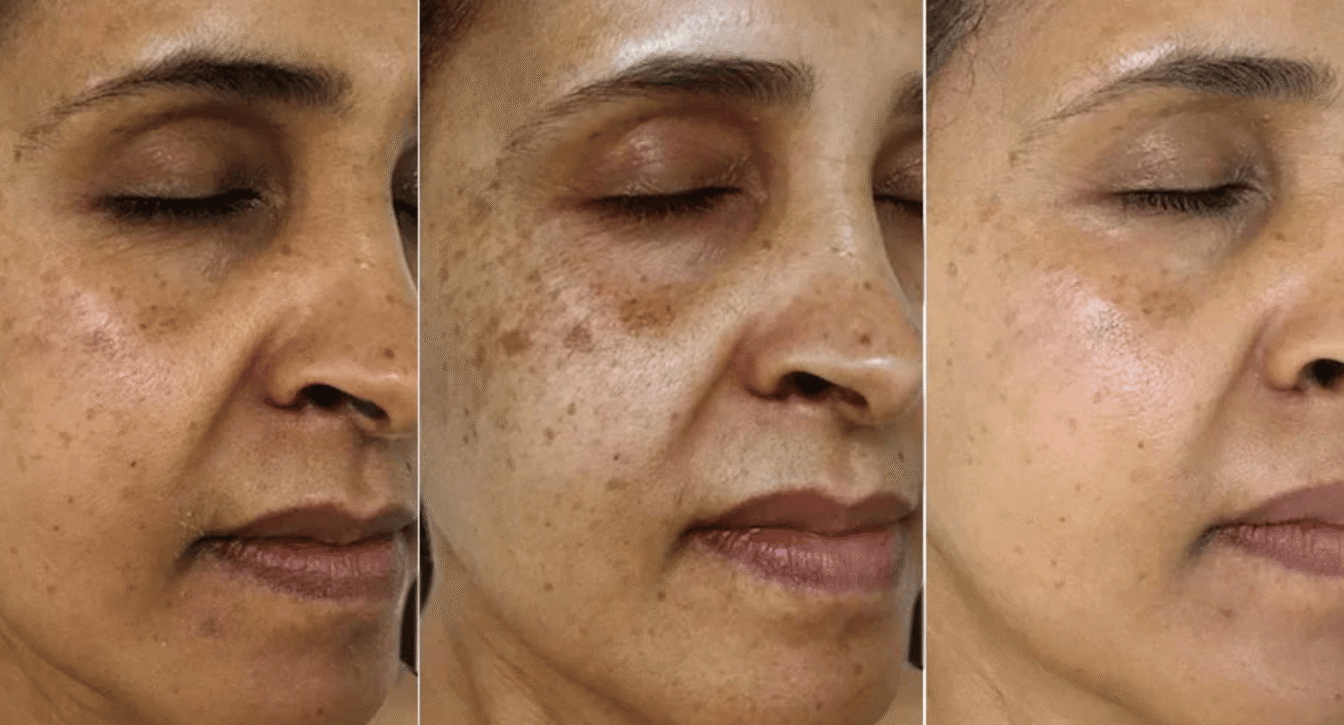
Post-inflammatory hyperpigmentation — PIH is the activation of melanocytes in response to inflammation. Melanin is deposited in the epidermis and/or dermis. The deeper the pigment lies, the more difficult correction becomes — and the more important dermal delivery of active ingredients is.
Atrophic scars — icepick, boxcar, rolling scars are the result of insufficient collagen synthesis during the healing process. They represent the most difficult task and require a combination of methods: biostimulation, mechanical stimulation — dermapen, fractional RF — and mesotherapy.
Scars: the biology of the problem
A scar is not simply “damaged skin,” but a fundamentally altered structure of the extracellular matrix. Normally, collagen in the dermis is organized as a woven network — “basket weave” — which provides elasticity. In scar tissue, type I collagen fibers are arranged in parallel, the dermis is either thickened or, conversely, atrophic, and the vascular network is disrupted.
The goal of a mesotherapy protocol for scars is to shift local biochemistry from the “scarring” pathway to the “regenerative” pathway: to stimulate the synthesis of type III collagen and hyaluronic acid, suppress the activity of TGF-β1 — the main profibrotic cytokine — and improve microcirculation.
Age-related changes: dermal deficiency
By the age of 40, collagen synthesis decreases by approximately 1% each year, the amount of hyaluronic acid in the dermis is reduced almost by half, and fibroblasts lose mitotic activity. The skin becomes thinner, loses turgor, and static wrinkles appear.
In this context, mesotherapy addresses the task of “dermal replenishment”: it delivers vitamins — cofactors of collagen synthesis — antioxidants, amino acids, and osmotically active components into the dermis, literally nourishing fibroblasts and activating their productivity.
Part II. Active ingredients in mesococktails: what and why
Vitamin C in mesotherapy: a multi-level active ingredient
Ascorbic acid is one of the most studied and universal active ingredients in mesotherapy practice. Its action covers several targets at once, making it indispensable in protocols for post-acne, scar correction, and anti-age therapy:
Inhibition of melanogenesis. Vitamin C suppresses the activity of tyrosinase — the key enzyme in melanin synthesis — by chelating the copper-containing center of the enzyme. This makes it one of the most effective depigmenting agents with a good safety profile.
Participation in collagen synthesis. Ascorbic acid is an essential cofactor of prolyl hydroxylase and lysyl hydroxylase — enzymes responsible for the hydroxylation of proline and lysine and the stabilization of the collagen triple helix. Without adequate vitamin C levels, fibroblasts cannot synthesize complete collagen.
Powerful antioxidant action. It neutralizes reactive oxygen species — ROS — which break down collagen, activate metalloproteinases, and stimulate melanogenesis.
Stimulation of fibroblasts. Direct stimulation of fibroblast proliferation and migration under the influence of ascorbic acid has been demonstrated, which is especially important when working with atrophic scars and age-related thinning of the dermis.
Vitamin mesoserum VITA C, 5 ml, professional mesotherapy line by Pelart Laboratory is a highly concentrated ascorbic acid product developed specifically for intradermal administration. The 5 ml format ensures sterility and precise dosing for each procedure. VITA C serum can be used for a wide range of clinical tasks: correction of post-inflammatory hyperpigmentation, biostimulation in atrophic changes, prevention of photoaging, and restoration of radiance in dull, tired skin. The stable form of vitamin C in the product ensures preservation of the active ingredient throughout the entire course, which is critical for achieving a predictable clinical result.
Active depigmenting ingredients: systemic work with pigment
Correction of hyperpigmentation is one of the most in-demand tasks in modern cosmetology and, at the same time, one of the most complex in terms of choosing active ingredients. Superficial products are effective when pigment is located in the epidermis, but dermal pigmentation requires an intradermal delivery route.
Professional depigmenting mesococktails work on several levels of melanogenesis simultaneously: they suppress tyrosinase activity, inhibit the transfer of melanosomes from melanocytes to keratinocytes, accelerate epidermal renewal, and promote the removal of already formed pigment.
Mesoserum ANTI PIGMENT, 10 ml, professional mesotherapy line by Pelart Laboratory is a specialized product for targeted correction of hyperpigmentation through mesotherapy. The 10 ml volume is optimal for working on larger areas: face, décolleté, and hands. ANTI PIGMENT serum is designed for protocols correcting post-inflammatory hyperpigmentation, melasma, solar lentigo, and post-acne spots. Its complex formula provides multi-level action on melanogenesis, allowing the skin tone to become more even without the risk of “bleaching” — an effect typical of aggressive single-component depigmenting agents.
An important advantage for practicing cosmetologists: ANTI PIGMENT can be used both independently and in combination with VITA C. The synergy of vitamin C and specialized depigmenting agents provides a significantly stronger and longer-lasting result than using each component separately.
Part III. Injection techniques: what affects the result
Choosing the product is only half of the success. The other half is the injection technique, which determines delivery depth, distribution of active ingredients, and intensity of biostimulation.
Papular technique — intradermal wheal
The classic mesotherapy technique: the product is injected strictly intradermally with the formation of a papule. It ensures precise delivery of active ingredients into the dermis and creates a depot with gradual release. It is optimal for working with VITA C and ANTI PIGMENT when correcting post-acne spots and focal hyperpigmentation.
Injection depth: 1–2 mm.
Volume per papule: 0.05–0.1 ml.
Spacing: 1–1.5 cm.
Linear retrograde technique
The product is injected while the needle is being withdrawn. This allows even distribution of the active substance along the injection line and is well suited for working with linear scars and wrinkles.
Nappage — superficial technique
Multiple microinjections at a depth of 0.5–1 mm. This creates an intense biostimulating effect due to repeated mechanical stimulation of the dermis. It is often used for diffuse improvement of skin texture in post-acne and age-related changes.
Mesotherapy with dermapen — device-assisted option
The product is delivered through microchannels created with a dermapen. This ensures even distribution across the entire treated area and minimizes discomfort. It is especially effective when working with atrophic scars: the mechanical action of the needles itself activates collagen synthesis, while the introduced active ingredients enhance this effect.
Part IV. Professional protocols
Protocol 1. Correction of post-inflammatory hyperpigmentation and post-acne spots
Goal: reduction of pigmentation intensity, evening of skin tone, improvement of skin texture.
Course: 6–8 procedures with an interval of 10–14 days.
Step 1. Preparation
Makeup removal, double cleansing, degreasing of the treatment area. Assessment of active inflammatory elements: mesotherapy is not performed in the presence of active acne in an exacerbation stage.
Step 2. Topical anesthesia
30–40 minutes of exposure if necessary. For experienced specialists and clients with a normal pain threshold — without anesthesia.
Step 3. Administration of ANTI PIGMENT
Papular technique or nappage in pigmented areas. Depth: 1–1.5 mm. Special attention is given to areas with the most intense pigmentation. Finish injections along the perimeter of the area to prevent a sharp border.
Step 4. Administration of VITA C
Linear retrograde technique or papular technique in the remaining areas for general improvement of skin tone and antioxidant protection. Mixing with ANTI PIGMENT for simultaneous administration is possible — check compatibility in the product instructions beforehand.
Step 5. Post-procedure care
Soothing mask or thermal water compress. Application of a post-procedure restorative product. SPF protection is mandatory.
Step 6. Client recommendations
For 24–48 hours: avoid heat procedures — sauna, hot shower — intense physical activity, and decorative cosmetics. Throughout the entire course: daily SPF protection of at least 30 and home depigmenting care to enhance the result.
Protocol 2. Correction of atrophic post-acne scars
Goal: improvement of skin relief, stimulation of collagen synthesis, smoothing of scar borders.
Course: 8–10 procedures. The first 4 with an interval of 7–10 days, then every 14 days.
Step 1. Mechanical stimulation — dermapen
Needle depth: 1.0–1.5 mm in the scar area, 0.5 mm in adjacent areas. Speed and pressure according to the device protocol. Mechanical stimulation itself triggers the wound-healing cascade — TGF-β3, IL-6, PDGF.
Step 2. Immediate application of VITA C
Apply VITA C serum to the surface immediately after dermapen, with light massage to enhance penetration through microchannels. In this context, vitamin C works as a biostimulator of type III collagen synthesis and as an antioxidant that neutralizes ROS generated in response to controlled trauma.
Step 3. Administration of ANTI PIGMENT for post-scar pigmentation
If atrophic scars are accompanied by pigmentation: point administration of ANTI PIGMENT into pigmented areas around the scars.
Step 4. Mask and completion
Cooling and soothing mask. Post-procedure protection.
Protocol 3. Anti-age mesotherapy with correction of dullness and uneven tone
Goal: biostimulation, restoration of radiance, correction of age-related pigment changes.
Course: 6 procedures with an interval of 14 days, followed by maintenance procedures once a month.
Step 1. Diagnosis
In the presence of uneven pigmentation: divide the zones. Areas with hyperpigmentation are treated with ANTI PIGMENT, while the remaining areas are treated with VITA C.
Step 2. Administration of VITA C — diffuse area
Nappage over the entire face and/or décolleté for general biostimulation. Special focus on the cheekbone area, perioral area, and forehead.
Step 3. Targeted administration of ANTI PIGMENT
Papular technique in areas of solar lentigo, age-related pigment spots, and uneven tone. Work “from the center of the spot outward” for even distribution of active ingredients.
Step 4. Finishing care
Moisturizing mask with hyaluronic acid. Application of SPF product.
Part V. Synergy of mesotherapy with other methods
Mesotherapy is most effective as part of combined protocols. The most evidence-based combinations are:
Mesotherapy + chemical peel
The peel is performed 7–10 days before mesotherapy. Accelerated epidermal renewal enhances the effect of depigmenting active ingredients. The reverse order — peel after mesotherapy — is possible but requires restoration of the skin barrier.
Mesotherapy + dermapen
The most powerful combination for scar correction. Mechanical stimulation + biochemical support. VITA C is an essential component in this combination.
Mesotherapy + LED therapy
Red light — 630–660 nm — after mesotherapy reduces post-procedure inflammation and additionally stimulates fibroblasts. Do not perform immediately on the day of injection if pronounced erythema is present.
Mesotherapy + fractional laser / RF
Mesotherapy is used as a preparatory and restorative stage. VITA C — 1–2 weeks before laser treatment as antioxidant preparation and during the recovery period.
Part VI. Contraindications and safety
Despite its high safety profile, mesotherapy has a number of limitations that the cosmetologist must take into account.
Absolute contraindications
- active inflammatory and infectious processes in the treatment area;
- autoimmune diseases in the exacerbation stage;
- pregnancy and lactation period;
- tendency to keloid scarring — requires special caution and risk assessment;
- intolerance to product components;
- blood clotting disorders / use of anticoagulants.
Relative contraindications
- diabetes mellitus — delayed healing of microinjections;
- use of NSAIDs within 7 days before the procedure — possible reduction in effectiveness;
- pronounced skin sensitivity.
Before administering any Pelart Laboratory mesotherapy product, it is necessary to carefully study the composition, perform a tolerance test, and obtain written informed consent from the client.
Part VII. Result evaluation and expectation management
One of the key professional competencies of a cosmetologist is the ability to correctly explain to the client what to expect and when.
Post-inflammatory hyperpigmentation: with regular use of ANTI PIGMENT in combination with VITA C and home depigmenting care, the first visible results appear after 3–4 procedures. Complete lightening of intense spots requires a course of 6–8 sessions plus supportive home care.
Atrophic scars: this is the most inert indication. Noticeable smoothing of skin relief appears no earlier than after 4–6 procedures. A significant result in medium-depth scars requires 8–10 procedures. Deep icepick scars require additional device-based methods.
Age-related changes and dullness: fast response. After just 1–2 procedures, the client notices improved radiance and texture. Correction of age-related pigmentation requires 4–6 procedures.
Conclusion
Mesococktails are not “youth injections,” but a precise biochemical tool whose effectiveness is determined by three factors: correct diagnosis, competent selection of active ingredients, and injection technique. The combination of vitamin mesoserum VITA C and mesoserum ANTI PIGMENT by Pelart Laboratory makes it possible to build protocols that work on several targets simultaneously — from inhibition of melanogenesis to biostimulation of collagen synthesis.
A systematic approach to mesotherapy, based on an understanding of the pathophysiology of the specific concern and the synergy of active ingredients, is what distinguishes a professional who achieves stable, measurable results from a specialist who simply performs an injection technique.