


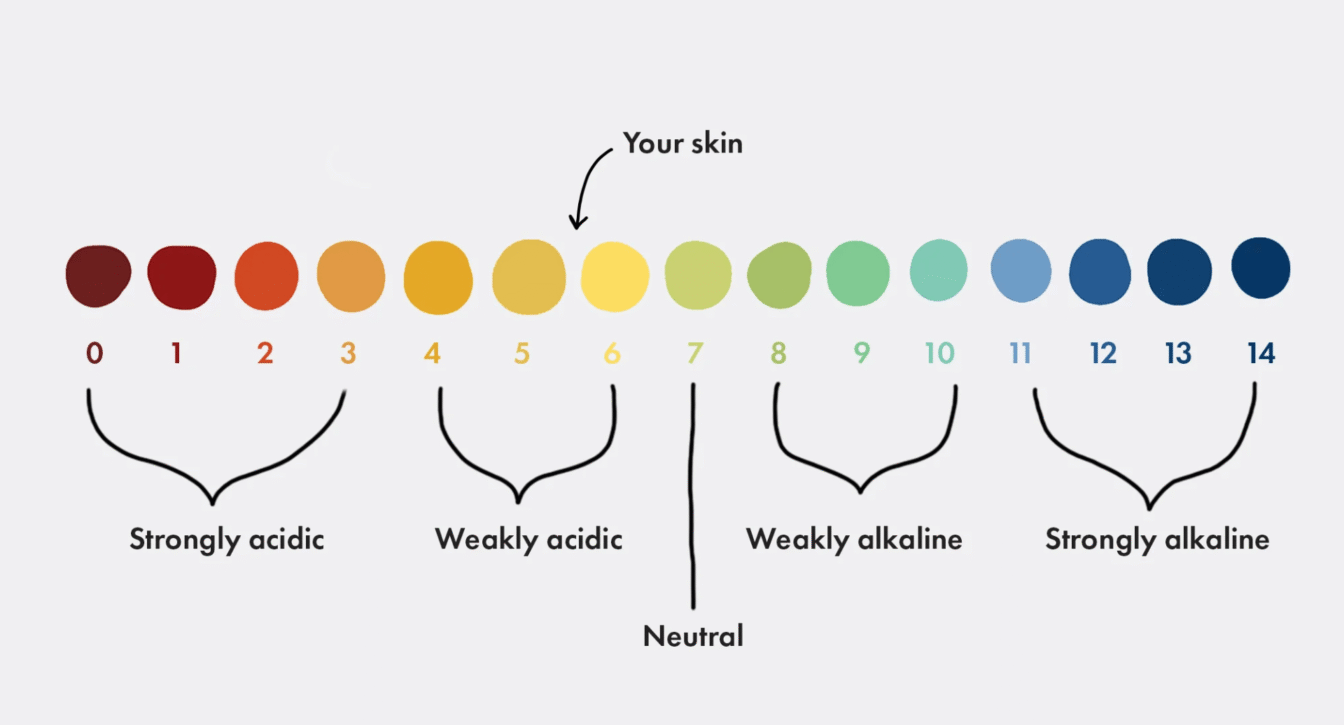
pH is a measure of the acid-alkaline balance of any environment on a scale from 0 to 14. A neutral value is 7.0. Anything below this is acidic, while anything above it is alkaline.
Human skin is not a neutral surface. Healthy skin has a slightly acidic pH, and this is not accidental: it is a biologically determined form of protection.
On the surface of the skin lies the so-called acid mantle — an extremely thin film made up of sebum, sweat, amino acids, lactic acid, and other components. It is this mantle that is responsible for the skin’s acidic pH and performs several critically important functions at once:
Barrier protection. It keeps moisture inside and prevents harmful microorganisms from entering from the outside.
Antimicrobial environment. Most pathogenic bacteria and fungi cannot survive in an acidic environment.
Microbiome regulation. The acid mantle supports the balance of beneficial microorganisms living on the skin.
Enzymatic activity. Many enzymes responsible for corneodesmolysis — the normal shedding of skin cells — only work at specific pH values.
When the acid mantle is intact, the skin looks healthy, even, and firm. When it is damaged, problems begin — problems that many people mistakenly attribute to “skin type” or genetics.
Normal Values and Deviations: What pH Is Considered Healthy?
For most adults, healthy skin pH falls within the range of 4.5–5.5. This is a slightly acidic environment.
It is important to understand that pH is not the same across different areas of the body and face.
| Area | Average pH value |
|---|---|
| Forehead | 4.2–5.1 |
| Cheeks | 4.4–5.5 |
| Nose | 4.0–5.0 |
| Eye area | 5.2–5.8 |
| Neck | 5.0–5.6 |
| Body, overall | 4.7–5.7 |
As soon as pH moves outside the normal range — either toward acidity or alkalinity — a cascade of disruptions begins.
Why Skin pH Becomes Imbalanced: The Main Culprits
The most unpleasant part of this topic is that many familiar actions in a daily skincare routine can quietly damage the skin’s acidic barrier. Here are the main risk factors.
Aggressive Cleansers
This is the number one cause. Traditional soap has a pH in the range of 9–11 — meaning it is strongly alkaline. Even a single wash with such soap temporarily shifts the skin’s pH toward alkalinity. With regular use, the skin simply does not have enough time to recover.
Many cleansing gels, foams, and peels also have a pH above 6.0–7.0 — and this already places stress on the acid mantle.
Hard Water
Tap water in many cities has a pH of 7.5–8.5 and contains hardness salts. Daily washing with such water gradually neutralizes the skin’s acidic environment. Residents of large cities with hard water are especially vulnerable.
Aggressive Peels and Scrubs
Physical or chemical exfoliation that disrupts pH balance is a double blow to the skin. Many mechanical scrubs have a neutral or alkaline pH, which not only damages the barrier but also creates an environment where pathogenic flora can multiply.
Stress and Hormonal Changes
Chronic stress increases cortisol levels, which leads to more inflammation and changes in the composition of sebum — and, as a result, a shift in pH.
Hormonal changes — the menstrual cycle, pregnancy, menopause, and puberty — directly affect skin pH. This is a clinically confirmed fact.
Certain Medications
Antibiotics, hormonal medications, and high-dose retinoids can all temporarily or permanently disrupt the skin’s acid-alkaline balance.
Ultraviolet Radiation
UV rays not only trigger photoaging but also damage components of the acid mantle. After intense sun exposure without protection, the skin restores its pH much more slowly.
Incorrectly Chosen Cosmetics
Products with a pH above 6.0 — toners, serums, creams — gradually alkalize the skin. This does not mean that all products with a neutral or slightly elevated pH are harmful, but systematic exposure matters.
What Happens to the Skin When pH Shifts?
A pH imbalance triggers several interconnected processes — and none of them work in your favor.
When pH Shifts Toward Alkalinity (pH > 6.0)
The protective barrier breaks down. Ceramides and lipids that hold the cells of the stratum corneum together break down faster. The skin loses moisture, becomes dry, and feels tight.
Pathogenic microorganisms become more active. Staphylococcus aureus, a bacterium associated with acne, atopic dermatitis, and other inflammatory conditions, thrives in an alkaline environment. At a pH above 6.0, its colonies grow several times more actively.
Enzyme function is disrupted. Enzymes responsible for the normal shedding of the stratum corneum lose activity. Cells “stick” to the surface — resulting in dullness, uneven texture, and clogged pores.
Sensitivity and reactivity increase. The skin starts reacting to products it previously tolerated well.
When pH Shifts Toward Excess Acidity (pH < 4.0)
This is less common, but it is also problematic.
Hypersensitivity and burning. An overly acidic environment irritates nerve endings and provokes redness.
Microbiome disruption. Not only pathogens are destroyed, but beneficial bacteria as well — especially lactobacilli, which help maintain a healthy barrier.
pH and Sensitive Skin: A Direct Connection
Skin sensitivity is not a type you are born with. It is a condition that is most often the result of imbalanced pH and a damaged barrier.
Studies show that in people diagnosed with atopic dermatitis, seborrheic dermatitis, rosacea, and psoriasis, skin pH is consistently higher than normal — within the range of 6.0–8.0. This is not the cause of the disease in itself, but it is a powerful aggravating factor.
The vicious cycle looks like this: elevated pH → barrier damage → transepidermal water loss → inflammation → an even greater increase in pH. It can only be broken by restoring the acid mantle.
If your skin:
- becomes red and irritated from products that used to suit it;
- constantly feels tight, even after applying cream;
- is prone to breakouts that seem to appear “out of nowhere”;
- takes a long time to recover after any external impact —
…there is every reason to check which products in your routine may be disrupting your skin’s pH and to begin restoring the barrier.
How to Restore and Maintain the Skin’s Acid Balance
The good news: with the right care, the skin can restore its pH on its own. Your task is to stop interfering with this process and create the right conditions for recovery.
Step 1: Change Your Cleanser
This is the most important change. Replace alkaline soap with products that have a neutral or slightly acidic pH. The ideal pH of a facial cleanser is 4.5–6.5.
Step 2: Use a Toner with the Right pH
A toner after cleansing is an opportunity to immediately adjust the skin’s pH. Choose products with an antioxidant formula and a pH within 5.0–6.0.
Step 3: Do Not Overuse Exfoliation
Chemical peels 1–2 times a week are the maximum for most skin types. Enzymatic and lactic acid peels with controlled pH are a gentler alternative.
Step 4: Support the Barrier
Products with niacinamide, ceramides, hyaluronic acid, and panthenol actively restore the lipid barrier and help the skin maintain a normal pH.
Step 5: Protect the Skin from the Sun
Daily SPF 30+ reduces photo-damage and helps preserve the integrity of the acid mantle.
Products with the Right pH for Home Care
Choosing the right cosmetics is a key factor in maintaining skin pH. Let’s look at three products, each of which addresses a specific task in the context of acid balance.
Soap with Neutral pH, Recell Line, 250 ml
Cleansing without damaging the barrier — this is the main purpose of this product.
Traditional soap is one of the main enemies of the acid mantle. Its alkaline pH of 9–11 literally “washes away” the skin’s protective layer with every use. People with dry, sensitive, or atopy-prone skin feel this immediately: tightness, redness, itching after washing — this is not a “normal reaction to cleansing,” but a sign of pH disruption.
Soap with Neutral pH, Recell Line solves this problem at the source: the formula is designed to provide effective cleansing without shifting the skin’s acid balance. A neutral pH — close to 7.0 — or a slightly acidic formula does not damage the acid mantle and allows it to recover between uses.
Ideal for:
- Sensitive and reactive skin
- Skin diagnosed with atopic dermatitis, psoriasis, or rosacea
- Anyone who experiences tightness after regular cleansing
- Recovery periods after aggressive procedures
How to use: Use daily for morning and evening cleansing of the face and body. Gently massage over the skin without rubbing. Rinse with warm — not hot — water.
Volume: 250 ml — an economical format for regular use.
Antioxidant Mousse with Vitamin C and Niacinamide, 180 ml
Smart cleansing with a dual action: it gently cleanses while simultaneously restoring the skin barrier.
Mousse is one of the gentlest cleansing formats. Its airy foam texture does not require active mechanical pressure on the skin, reduces the risk of disrupting the lipid barrier, and ensures even distribution of active ingredients.
But the main value of this mousse lies in its formula.
Vitamin C is a powerful antioxidant which, in the context of pH balance, plays an additional role: it participates in collagen synthesis, which strengthens the dermal matrix and indirectly supports the skin’s barrier functions. In addition, vitamin C works at an acidic pH — optimally 2.5–3.5 — which makes vitamin C-based products “allies” of the acid mantle.
Niacinamide — vitamin B3 — is one of the best ingredients for restoring the skin barrier. It has been clinically confirmed that niacinamide:
- increases the synthesis of ceramides and other lipids in the stratum corneum;
- reduces transepidermal water loss, or TEWL;
- reduces inflammation and redness;
- regulates sebum production.
All of this directly affects the skin’s ability to maintain a stable pH.
Ideal for:
- Dull, tired, uneven skin tone
- Enlarged pores and oily shine
- Skin that needs barrier restoration
- Daily care for any skin type
How to use: Apply to damp facial skin, gently distribute, and rinse off. Use in the morning and/or evening. After cleansing, apply toner or serum.
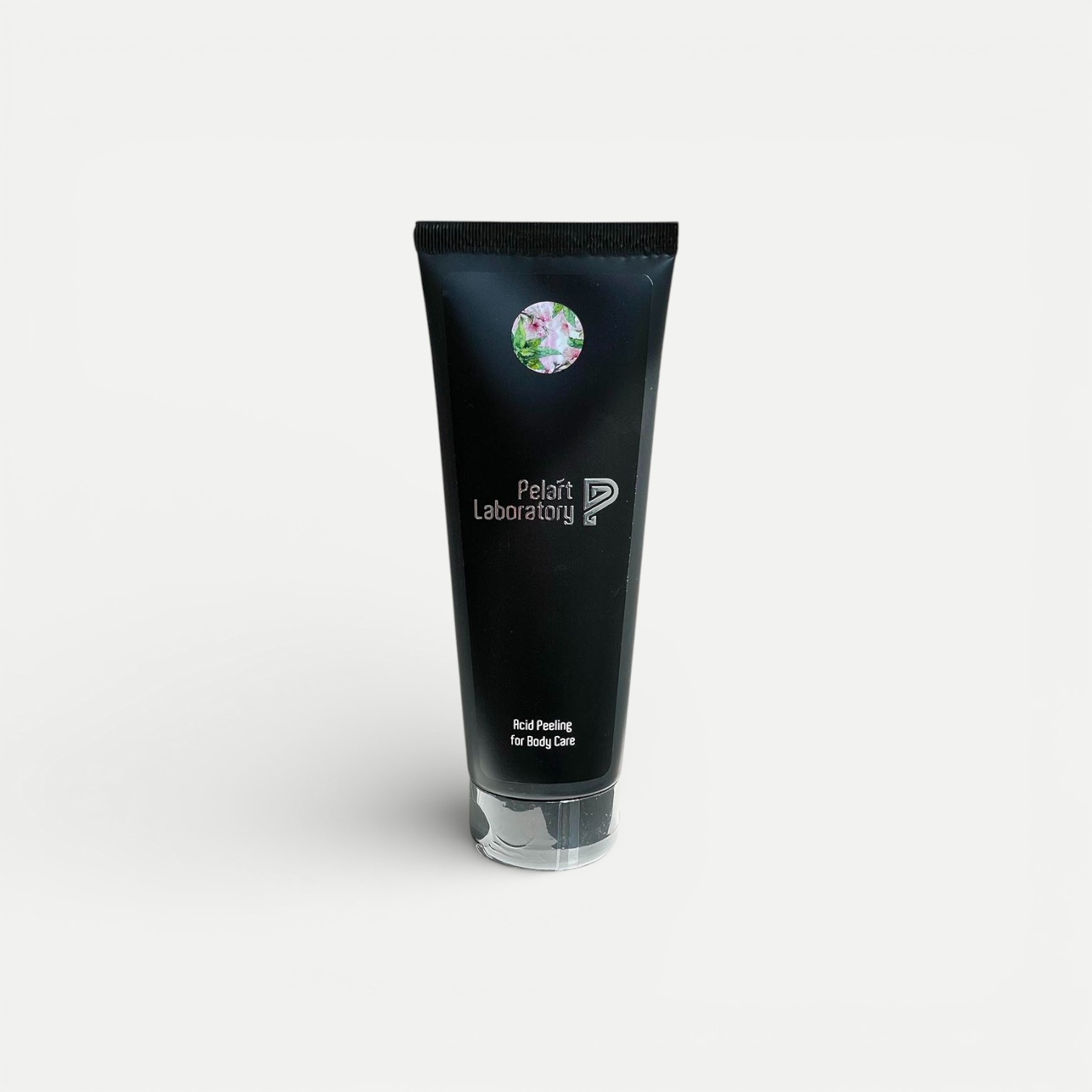
Cream-Paste “Lactic Peel,” Fruit and Acid Complexes, 100 ml
Exfoliation without disrupting pH — a task that not every peel can handle.
Most mechanical scrubs have a neutral or alkaline pH. They physically damage the stratum corneum and alkalize the skin at the same time — a double blow to the barrier. This is why the skin often looks red and irritated after many scrubs.
Cream-Paste “Lactic Peel” works in a fundamentally different way. Its action is based on lactic acid — an AHA acid with unique properties in the context of skin pH.
Lactic acid is a natural component of the acid mantle. It is not foreign to the skin: it is produced by lactobacilli as part of the natural microbiome. When used correctly, lactic acid:
- dissolves intercellular “bridges” — desmosomes — gently exfoliating dead cells without mechanical friction;
- normalizes the pH of the skin surface by working in an acidic environment;
- deeply hydrates — lactic acid is a natural moisturizing factor, or NMF, and attracts water into the stratum corneum;
- stimulates collagen synthesis with regular use.
The cream-paste format is not an aggressive acid peel, but gentle exfoliation with a conditioning effect. Fruit acid complexes in the formula complement the action of lactic acid, providing comprehensive skin renewal.
Ideal for:
- Dull skin with uneven texture
- Clogged pores and “grainy” skin texture
- Post-acne marks and superficial pigmentation
- Skin that needs delicate yet effective renewal
How to use: Apply to dry or damp cleansed skin and gently massage in circular motions for 1–2 minutes. Rinse with warm water. Use 1–2 times a week. After peeling, always apply a moisturizer. On days when you use the peel, apply SPF in the morning.
Important: Do not use on skin with active inflammation or damage.
Frequently Asked Questions
How can I find out my skin’s pH?
Indirect signs of imbalanced pH include tightness after cleansing, redness from familiar cosmetics, frequent breakouts, constant oily shine, or, on the contrary, flaking. For accurate measurement, there are pH test strips for skin — they can be found in pharmacies and specialized stores.
How long does it take to restore skin pH?
After a single exposure to alkaline products, healthy skin restores its pH within 30 minutes to several hours. With a chronically damaged barrier, full recovery takes 2 to 8 weeks with proper care.
Can I determine the pH of a cosmetic product myself?
Yes, using universal pH strips or a digital pH meter. However, it is easier to rely on information from the manufacturer or choose brands that openly state the pH of their products in the description.
Should skincare be changed depending on the season?
In winter, when indoor heating lowers air humidity and TEWL increases, the skin becomes especially prone to alkalization and barrier disruption. During this period, it is worth switching to gentler cleansing and more intensive hydration.
Is neutral pH soap suitable for daily use on the body?
Yes, and this is a recommended format for sensitive body skin. It is especially relevant for people with atopic dermatitis, psoriasis, and dry skin.
Can I use a peel if I have sensitive skin?
If the barrier is damaged, aggressive peels should be avoided until it is restored. Lactic acid peels are a gentler option; however, it is best to start with minimal frequency — once every 10–14 days — and carefully monitor the skin’s reaction.
Conclusion
Skin pH is not an abstract biochemical indicator. It is the foundation on which the health, resilience, and beauty of your skin depend.
Good skin does not begin with an expensive anti-aging serum or an aggressive peel. It begins with proper cleansing and maintaining acid balance — every day, with every contact with the skin.