



Walk into any cosmetics store and look at the shelf with sunscreen products. Dozens of options, similar packaging, numbers like 30, 50, 50+ — and complete confusion. Which one should you choose? How are they even different?
Most people choose SPF based on the principle of “as long as it has SPF” or “the higher the number, the better.” As a result, there is oily shine within an hour, a mask-like feeling on the face, clogged pores, or, on the contrary, tightness and flaking. Then comes the conclusion: “Sunscreens are not suitable for me.”
They are suitable. You just need the right one.
A sunscreen product is not universal. Its effectiveness and comfort depend not only on the SPF factor, but also on the formula, texture, and additional ingredients. And all of this is directly connected to your skin type.
In this article, we will explain how to choose SPF for a specific skin type — without unnecessary complications, with clear recommendations.
A Little Theory: What Is SPF and Why Do You Need It Every Day?
SPF — Sun Protection Factor — is the protection factor against UVB radiation, which causes sunburn and skin cancer. But in addition to UVB, there is also UVA radiation: it penetrates deeper, breaks down collagen, triggers pigmentation, and accelerates skin aging. A good SPF product protects against both types of radiation.
Another separate topic is HEV radiation — visible blue light — from phone screens, computers, and LED lamps. Studies show that HEV can also contribute to photoaging and pigmentation, especially in people with darker skin tones. Modern new-generation protective products take this factor into account as well.
Why do you need SPF every day, not only at the beach?
- UV radiation is present even in cloudy weather — up to 80% passes through clouds.
- UVA rays pass freely through car windows and office windows.
- Small chronic doses of UV accumulate over the years.
- This daily exposure is responsible for a large part of photoaging.
- If you use acids, retinol, or peels, your skin is especially vulnerable to the sun.
The conclusion is simple: SPF is not a summer accessory, but the daily final step of your morning skincare routine.
What Types of Sunscreen Filters Exist: Mineral and Chemical Filters
Before discussing SPF by skin type, it is important to understand the difference between filter types, because this directly affects your choice.
Chemical — organic — filters, such as avobenzone, octocrylene, and tinosorb, absorb UV radiation and convert it into heat. The advantage: lightweight textures and no white cast. The disadvantage: they may irritate sensitive skin and react with sweat.
Mineral — physical — filters, such as zinc oxide and titanium dioxide, reflect and scatter UV rays. The advantage: they work immediately after application, rarely cause irritation, and are suitable for reactive skin. The disadvantage: a denser texture and a possible white cast, especially on darker skin tones.
Combined formulas use both types of filters, reducing the disadvantages of each. Most modern high-quality SPF products use exactly this approach.
SPF for Dry Skin: Protection + Nourishment
Characteristics of Dry Skin
Dry skin produces little sebum and is prone to dehydration, flaking, and a feeling of tightness. Its barrier function is weakened: the skin retains moisture less effectively and reacts more quickly to external factors, including solar radiation.
Regular “lightweight” SPF fluids or gels are often not the best choice for dry skin: they may make the skin feel even more dehydrated. What is needed is protection with nourishing and moisturizing ingredients.
What to Look for in the Formula
- Hyaluronic acid — retains moisture in the skin
- Ceramides and fatty acids — restore the barrier
- Glycerin and panthenol — hydrate and soothe
- Cream or balm texture — comfortable application without tightness
What Is Less Suitable?
Sprays with a high alcohol content, mattifying fluids with absorbent ingredients, and very lightweight gel textures — these can intensify the feeling of dryness.
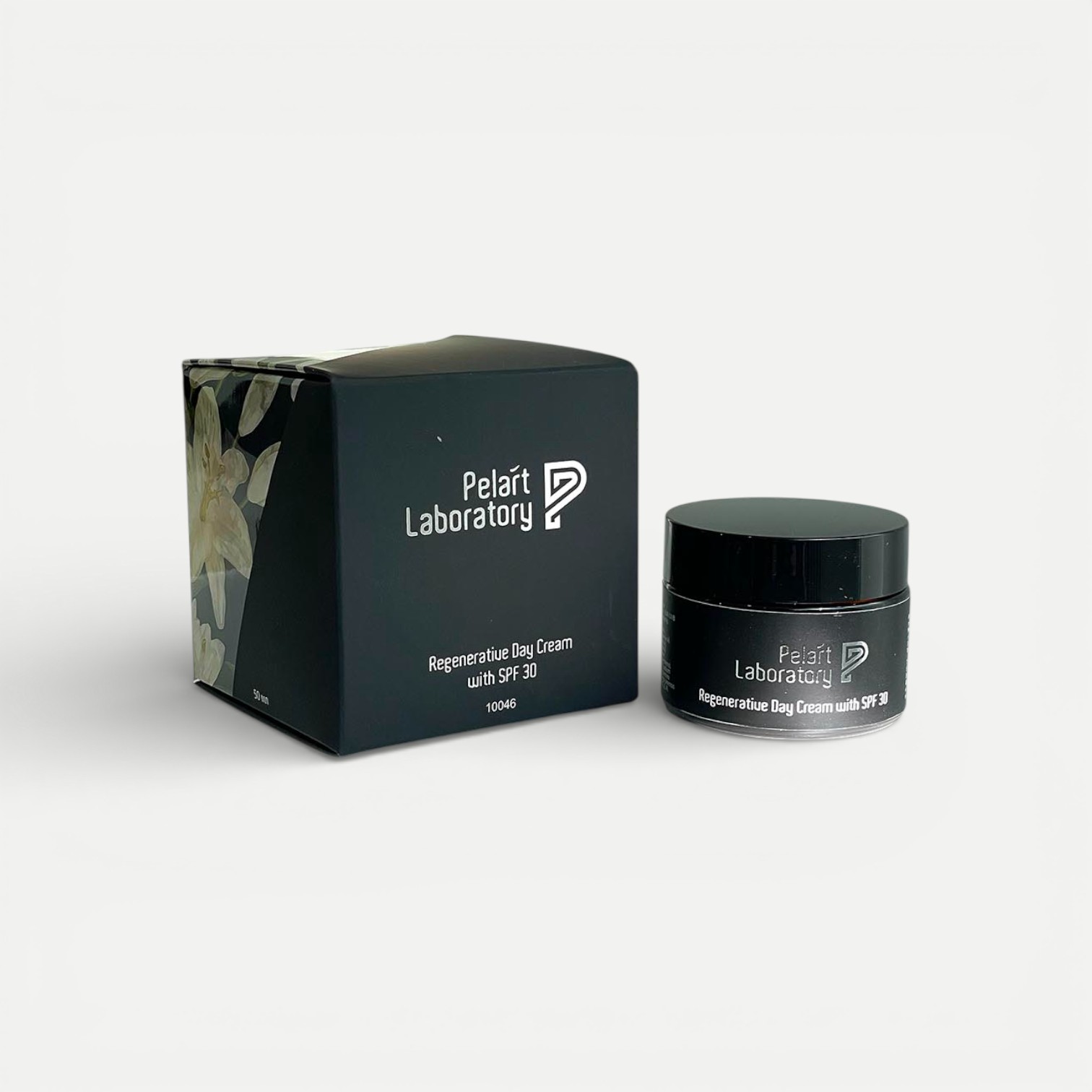
Recommendation: 3D Moisturizing Day Cream with SPF 30, Smart Biologica Complexes, 50 ml by Pelart Laboratory is an optimal choice for dry and normal-to-dry skin. The formula is based on a “smart” biological complex that provides multi-level hydration: the skin receives protection from UV radiation while being supplied with moisture throughout the day. The creamy texture applies easily, does not pill under makeup, and does not feel heavy — while helping eliminate the tightness often experienced by dry skin after regular SPF products. The 50 ml format is convenient for daily use. SPF 30 provides sufficient protection for daily city use and short walks.
SPF for Oily Skin: Protection Without Shine and Clogged Pores
Characteristics of Oily Skin
Oily skin is the skin type that most often has problems with sunscreen products. Classic SPF creams can turn into a “mask” on oily skin within an hour: shine, a feeling of clogged pores, and the risk of comedones. This is why many people with oily skin skip SPF — and pay for it with early photoaging and pigmentation.
The solution is not to avoid protection, but to choose the right format.
What to Look for in the Formula
- Mattifying ingredients — kaolin, silica absorbers, niacinamide
- Lightweight texture — fluid, gel, dry spray
- Non-comedogenic formula — this label is essential
- Sebum-regulating ingredients — niacinamide, zinc
What Is Less Suitable?
Rich nourishing creams, products with oils, heavy emulsions, products with beeswax or lanolin.
Recommendation: Sunscreen Spray “Antistress” SPF 50, Vegetable Series, 100 ml by Pelart Laboratory is an ideal solution for oily and combination skin. The spray format is fundamentally different from a cream: it is applied in a thin, even layer without rubbing, does not create a “coated” feeling, and dries instantly. SPF 50 provides reliable protection even with an active lifestyle. The Vegetable Series is based on plant-derived ingredients — an additional benefit for skin prone to reactions to synthetic filters.
An important advantage of a spray for oily skin is the convenience of reapplying it over makeup throughout the day. The 100 ml size makes it easy to always have the product at hand — in your bag or on your desk. The name “Antistress” reflects another property of the formula: the product helps the skin cope with oxidative stress caused by UV and HEV radiation.
SPF for Sensitive Skin: Protection Without Irritation
Characteristics of Sensitive Skin
Sensitive skin is perhaps the most difficult case when choosing SPF. It reacts with redness, burning, itching, or flaking to the most unexpected ingredients: fragrances, preservatives, and certain chemical filters. A regular SPF cream with an unfamiliar formula can feel like a lottery.
At the same time, sensitive skin especially needs protection: its barrier function is weakened, reactivity is high, and inflammation worsens under the influence of UV radiation. Ignoring SPF with sensitive skin means maintaining chronic micro-inflammation.
What to Look for in the Formula
- Mineral filters — zinc oxide, titanium dioxide
- Soothing ingredients — panthenol, allantoin, Centella asiatica, oats
- Probiotic and prebiotic complexes — support the microbiome and reduce reactivity
- No fragrance, alcohol, or harsh preservatives
- Additional protection against HEV — for those who spend a lot of time in front of screens
What Is Less Suitable?
Products with strong fragrances, chemical filters such as avobenzone and octocrylene in high concentrations, alcohol-based sprays, and products with a large amount of synthetic preservatives.
Recommendation: Protective Day Cream Unisex Cream “Probio Protective” SPF/HEV, Unisex Probio Line, 50 ml by Pelart Laboratory is specially developed with the needs of reactive skin in mind. The key difference from most SPF products is the probiotic complex in the formula, which works at the level of the skin microbiome: it supports its balance, reduces inflammatory reactivity, and strengthens the barrier function. This is essential for sensitive skin, which needs not only sun protection but also support for its own protective mechanisms.
Additional protection against HEV radiation makes Probio Protective a relevant choice for city residents and people who work at a computer. The unisex format and 50 ml size are suitable both for individual use and for couples who want to simplify their morning routine. The lightweight cream texture is also suitable for men’s skin — thinner and often prone to irritation after shaving.
SPF for Combination Skin: Balance Between Different Zones
Characteristics of Combination Skin
Combination skin is the most common skin type and, at the same time, one of the most inconvenient when choosing skincare. The T-zone — forehead, nose, and chin — is oily, has enlarged pores, and is prone to shine and comedones. The cheeks are normal or slightly dry, sometimes with a feeling of tightness.
One SPF product must handle two opposite tasks: not weighing down the T-zone and not drying out the cheeks. This is achievable, but it requires choosing the right texture.
What to Look for in the Formula
- Balanced texture — lightweight cream or fluid, not a gel and not a rich cream
- Sebum-regulating ingredients in moderate amounts
- Hyaluronic acid — light hydration without greasiness
- Niacinamide — helps both normalize sebaceous gland activity and strengthen the barrier
Two Effective Approaches for Combination Skin
Approach 1: one universal product. Choose a lightweight cream with SPF that does not cause shine in the T-zone and does not make the cheeks feel tight. 3D Moisturizing Day Cream with SPF 30 is suitable for normal-to-combination skin where the T-zone is not too oily.
Approach 2: zone-based application. Use Spray “Antistress” SPF 50 on the T-zone — lightweight application without heaviness — and 3D Moisturizing Cream with SPF 30 on the cheeks and perioral area for extra hydration. This approach takes a little more time but gives the best balance.
How to Apply SPF Correctly: Common Mistakes
Even the best product will not protect properly if applied incorrectly.
Mistake No. 1: Too little product. The standard amount for the face is ¼ teaspoon — about 1.5–2 ml. Most people apply 2–3 times less. Too little product means the real SPF level is much lower than stated.
Mistake No. 2: Applying over several skincare layers without waiting. SPF is applied as the last step of the morning routine — before makeup — but it is important to let the previous layers absorb. One to two minutes is enough.
Mistake No. 3: Applying only in the morning without reapplication. SPF protection decreases after 2–3 hours due to sun exposure, sweat, and touching the face. During active outdoor exposure, reapply every 2 hours. This is exactly where Spray “Antistress” SPF 50 is useful — it can be applied over makeup in seconds.
Mistake No. 4: Forgetting the neck, décolleté, and ears. These areas age no slower than the face. Include them in your daily SPF application.
Mistake No. 5: Skipping SPF on cloudy days and in winter. Up to 80% of UV radiation passes through clouds. In winter, snow reflects up to 80% of UV rays — the load on the skin is no less than in summer.
Quick Selection Guide: Which SPF Is Right for You?
| Skin type | Recommended texture | Product |
|---|---|---|
| Dry | Cream with moisturizing ingredients | 3D Moisturizing Cream SPF 30 |
| Oily | Spray, lightweight fluid, mattifying formula | Spray “Antistress” SPF 50 |
| Sensitive | Cream with probiotics, HEV protection | Probio Protective SPF/HEV |
| Combination | Lightweight cream or zone-based application | Cream SPF 30 + Spray SPF 50 |
| Normal | Any comfortable texture | Probio Protective or SPF 30 |
Conclusion: SPF Is the Most Important Product in Your Routine
If you had to choose only one skincare step that truly slows aging and helps prevent pigmentation, it would be SPF. Not a retinol serum, not an antioxidant cream, not expensive procedures. It is daily sun protection.
Three products from Pelart Laboratory cover the needs of every skin type:
- Probio Protective SPF/HEV — for sensitive and reactive skin, with blue light protection
- 3D Moisturizing Cream SPF 30 — for dry and normal skin, care and protection in one step
- Spray “Antistress” SPF 50 — for oily skin and an active lifestyle, convenient reapplication throughout the day
Choose yours — and make SPF a habit that will be visible on your face in 10 years.
The full range of SPF products from Pelart Laboratory is available at pelartlabbenelux.com. Not sure what your skin type is? Book a facial skin analysis, and we will help you choose the right product.